

CFJ Op-Ed: Why Trade Enforcement — Not Foreign Price Controls — Is the Right Response to High U.S. Drug Prices
Updated: Feb 28
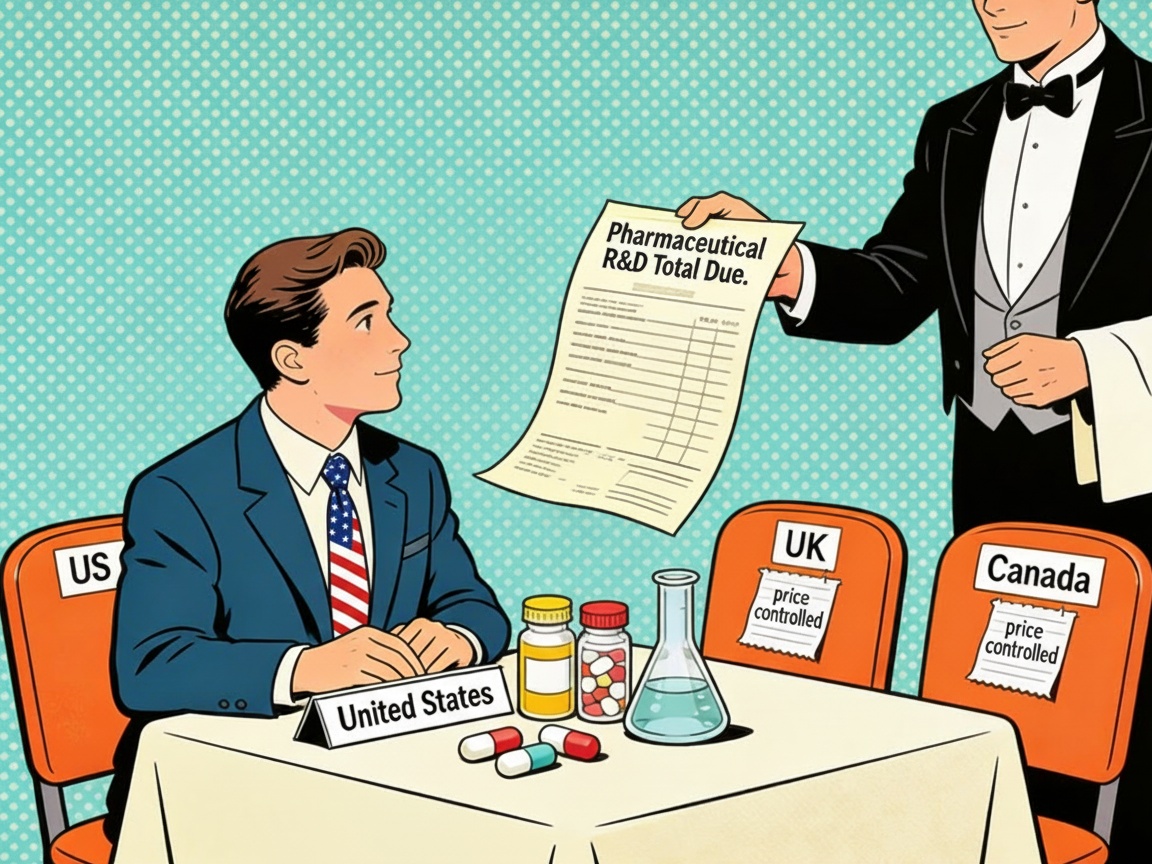
In a new op-ed published at Truth on the Market, CFJ’s Jeffrey Depp argues that the Centers for Medicare & Medicaid Services’ (CMS) proposed GLOBE and GUARD drug pricing models move U.S. policy in precisely the wrong direction.
The op-ed, titled “Disciplined Trade Policy Is the Answer to America’s Drug Pricing Problem,” contends that importing foreign government-set prices into Medicare will not solve the structural causes of high drug prices. Instead, it risks compounding existing distortions and weakening long-term innovation incentives.
The Core Argument
CMS’s GLOBE and GUARD proposals would benchmark certain Medicare drug payments to prices established in foreign countries. While framed as cost-containment measures, these benchmarks reflect centralized price-setting systems that rely on monopsony bargaining power and state-imposed ceilings.
The op-ed argues that such foreign prices are not neutral market signals. They are political artifacts shaped by domestic fiscal constraints and administrative controls.
Importing those price controls into Medicare does not correct the underlying asymmetry in global pharmaceutical markets. It internalizes it.
The Real Problem: Global Cost-Shifting
Many OECD countries suppress pharmaceutical prices through government negotiation and budget constraints. Because drug development entails high fixed costs, significant uncertainty, and global scale, those suppressed prices shift a disproportionate share of research-and-development cost recovery onto the United States.
The United States has historically borne that burden.
Rather than mimicking foreign administrative pricing systems, the op-ed argues that policymakers should confront the asymmetry directly through trade enforcement mechanisms — including Section 301 of the Trade Act of 1974.
Trade Enforcement as a Coherent Alternative
Section 301 authorizes the United States Trade Representative to respond to foreign acts, policies, or practices that are unreasonable or discriminatory and that burden U.S. commerce. Sustained foreign pharmaceutical price suppression falls squarely within that description.
The op-ed contends that calibrated, reciprocal tariffs — applied broadly and designed to bring about market-based pricing reforms in foreign countries — would more directly address global pricing distortions than embedding foreign price controls into Medicare’s reimbursement structure.
The objective is not protectionism for its own sake. It is restoring balance through market-based drug pricing globally.
Innovation, Markets, and Long-Term Growth
The op-ed further explains that prices formed in competitive markets serve an informational function. Administrative price-setting cannot replicate the signals that guide capital allocation in high-risk, innovation-intensive industries.
Policies that systematically reduce expected returns in pharmaceutical R&D may yield short-term budget effects but carry long-run consequences for medical innovation, economic growth, and national resilience.
As the piece concludes: the United States does not need more bureaucratic pricing mechanisms layered onto an already complex system. It needs less intervention and more market discipline.


