

Op-Ed: Artificial Intelligence, Natural Ignorance
- Jeffrey Depp
- Jun 5
- 2 min read
Updated: 2 hours ago
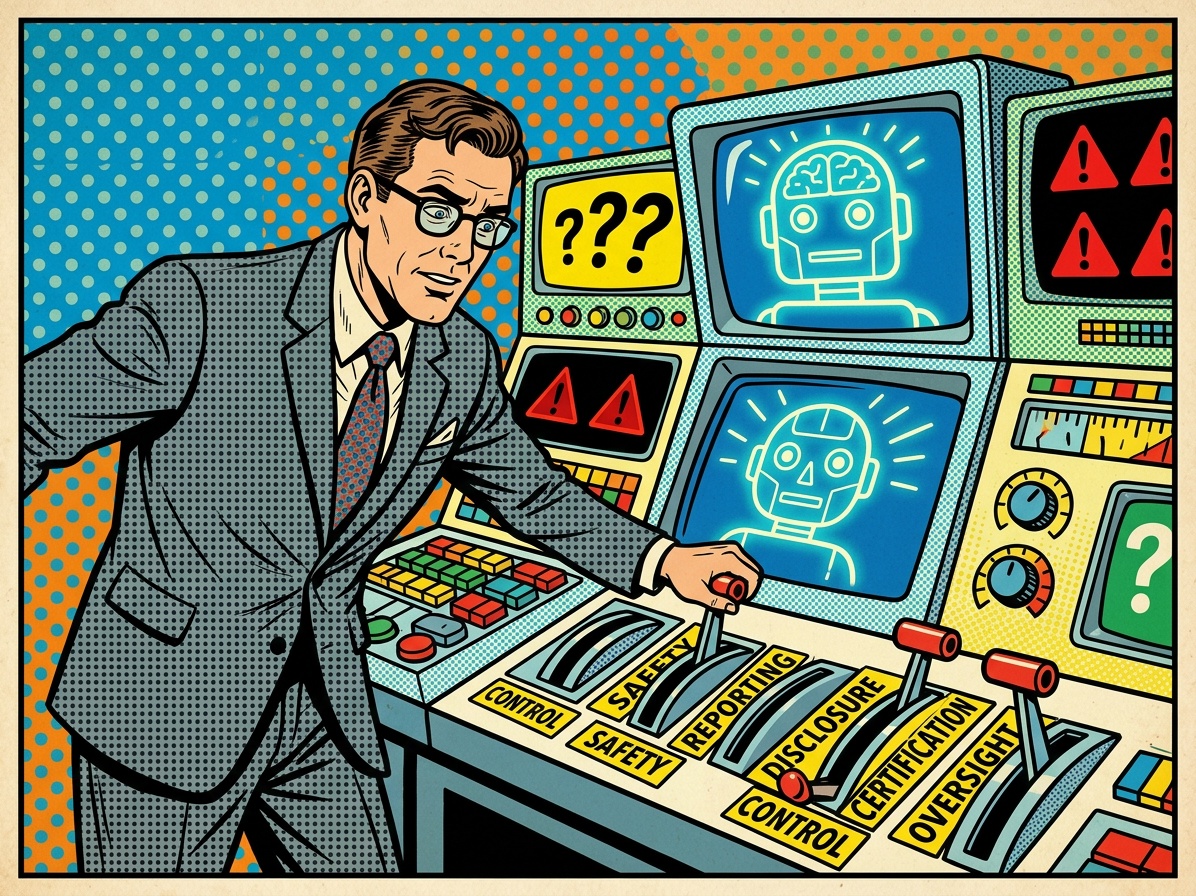
Artificial Intelligence and Natural Ignorance
Committee for Justice Senior Counsel, Law & Policy, Jeffrey Depp has published a new article at Truth on the Market examining one of the most important—and often overlooked—questions in the debate over artificial intelligence regulation: How much can policymakers realistically know about the future of AI?
The article, "Artificial Intelligence, Natural Ignorance," argues that many contemporary AI policy proposals rest on a flawed assumption—that regulators, experts, and government agencies can accurately predict how AI technologies will develop, how they will be used, and what risks they will pose years into the future. Drawing on the Austrian economics tradition, Depp contends that uncertainty is not merely a temporary obstacle that can be overcome through better data or more sophisticated forecasting. Rather, it is an inherent feature of innovation itself.
The Knowledge Problem and AI
The article builds on the work of economists Friedrich Hayek and Ludwig von Mises, both of whom emphasized the limits of centralized decision-making in complex and rapidly changing environments. Hayek famously argued that the knowledge necessary to coordinate economic activity is dispersed among millions of individuals and cannot be effectively centralized by planners or regulators.
According to Depp, artificial intelligence presents a modern version of the same challenge. Policymakers frequently assume they can identify the most important future uses of AI, anticipate the most significant risks, and design regulatory frameworks capable of steering technological development toward preferred outcomes. Yet the history of innovation suggests otherwise.
Many of the most transformative technologies—from the internet to smartphones to social media—generated applications, industries, and business models that few experts anticipated. AI is unlikely to be any different. The article argues that attempts to regulate AI based on current assumptions about future developments risk constraining precisely the entrepreneurial experimentation that drives discovery and progress.
Why Humility Matters
Rather than viewing ignorance as a problem to be eliminated, Depp argues that policymakers should recognize it as a permanent feature of human affairs. Markets and competitive processes help society cope with uncertainty because they allow individuals and firms to test ideas, learn from failure, and adapt to new information as it emerges.
This insight has important implications for AI governance. Regulatory approaches that assume government officials possess sufficient knowledge to direct technological development may ultimately prove less effective than frameworks that preserve flexibility and allow decentralized experimentation to continue.
The article does not suggest that AI should exist in a regulatory vacuum. Instead, it argues that policymakers should approach AI governance with a greater degree of institutional humility, recognizing the limits of what can be known in advance and the importance of preserving the discovery processes that generate innovation.
Looking Ahead
As governments around the world consider new AI regulations, debates about safety, competition, intellectual property, and consumer protection are likely to intensify. Depp's article offers a reminder that these discussions should not overlook a fundamental reality: many of the most important consequences of technological change are unknowable until they occur.
For that reason, policies that emphasize adaptability, competition, and experimentation may prove more effective than efforts to centrally direct the future of artificial intelligence.
Read the full article, "Artificial Intelligence, Natural Ignorance," at Truth on the Market.


